

What the interpreter actually does on a stand
Most conversations on a stand last two to five minutes: where the buyer is from, what volume they handle, which model they are looking at, whether they are a distributor or an end user. The job is to keep that rhythm, not to deliver a polished speech.
The second job is qualification. A buyer who walks past twice, photographs the price list and asks about MOQ is worth more than a crowd listening to a pitch. A good stand interpreter notices that and tells you at lunch.
- Opening conversations and product walk-throughs
- Price, MOQ, lead time and payment terms, said the same way all week
- Technical questions handed to your engineer, and the answer translated back exactly
- Cards, follow-up notes, and a short daily list of who was worth chasing
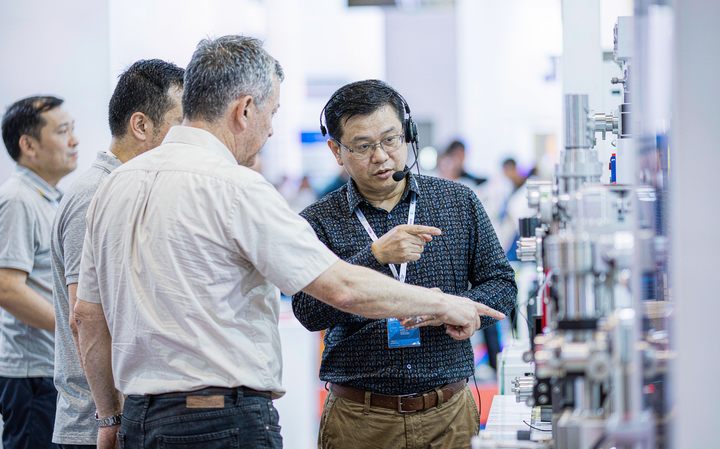
We ask for the price sheet and a product glossary before the show. Without them the interpreter improvises, and improvised numbers are how a deal starts badly.
Canton Fair, in practice
The Canton Fair runs in three phases, and walking from one hall to another can take twenty minutes. Interpreters are booked by the day, usually with a three to five day minimum, because the value is continuity: the same buyer comes back on day three with a colleague and expects you to remember the first conversation.
Buyer badges, hall numbers and stand addresses are in Chinese, and a taxi driver will not know which gate you mean. The interpreter handles that, which is why the day often starts before the hall does.
What we need before the first morning
- Stand number, hall, and the days you actually need cover, including set-up day
- Product list with model numbers and the three or four selling points you repeat most
- Price list, MOQ, lead times, and what must not be quoted
- Who is on the stand: engineer, sales, manager, and who can approve a discount
If the line has 200 SKUs and the interpreter sees the catalogue at the booth, the first day is gone.
How fair work is priced
By the day, not by the hour, with a minimum of three days for most shows. Travel and accommodation outside the host city are separate. Two interpreters for one large stand is normal when you run two meeting tables at once.
Frequently asked
Can one interpreter cover two neighbouring stands?
Only if both stands are yours and the traffic is light. Two companies sharing one interpreter usually means both sides lose the conversations that mattered.
Do we need the interpreter on set-up day?
Not for language, often for logistics: badge collection, stand fittings and the venue paperwork that only exists in Chinese.
Can you supply someone who knows our industry?
For machinery, electronics, textiles, chemicals and building materials, usually yes. Send the product list and we will say honestly whether we have someone who has worked in it.
Talk to us directly
- +86 177 5746 8006
- iadrecompany
- cs@iadre.com
China time, 08:30–21:00