

2000
team working together since
2014
registered as a company
65
languages
Across China
interpreters in major cities
2
readers per text
English into Chinese, in the room where it is decided
The supplier's engineer reads English, but what he reads is a specification written by someone else. In the meeting he speaks Mandarin, quickly, with model numbers and shop-floor shorthand, and your side needs the answer before the next slide. That gap is what an interpreter closes, and it is the work we do most for clients outside China.
Consecutive for a negotiation, simultaneous with a booth and two interpreters for a conference, one interpreter walking the plant during an audit. All of it inside China: Beijing, Shanghai, Guangzhou, Shenzhen, Ningbo, and the industrial belts around them in Zhejiang, Jiangsu and the Pearl River Delta. We do not claim an office in every city; we claim interpreters we have worked with for years in most of them.
- Factory audits, supplier qualification and corrective-action meetings
- Price and specification negotiations, distributor appointments
- Trade fairs: Canton Fair, Shanghai industry shows, buyer meetings
- Delegation visits, technical training, handover of a new line
- Conferences and board meetings, simultaneous with equipment
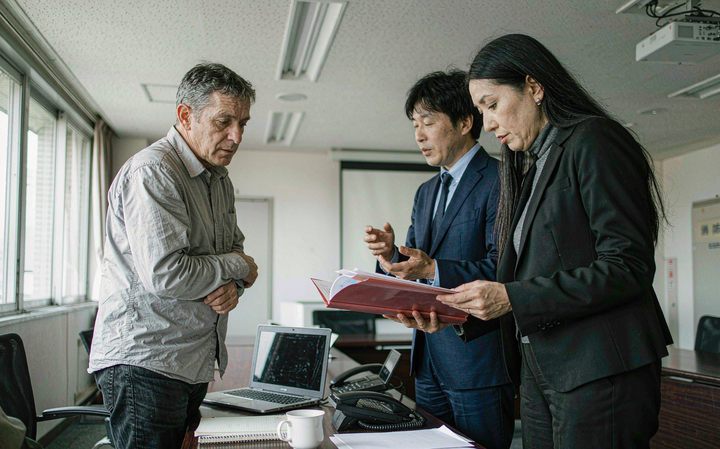
A day of interpreting and a day of translation are priced differently. Mixed into one quote, you can no longer see what you are paying for — we quote them apart.
After the meeting, the paper starts
An interpreting day produces documents whether or not anyone planned for it: minutes that have to be agreed in two languages, a contract with the revised price, a technical annex promised for next week, certificates for the engineers who will come back for installation.
Because the interpreter was in the room, the terminology is already settled. That glossary goes straight into the translation, which is why written work after an interpreting job moves faster and reads more consistently than a cold start.
- Bilingual minutes and agreed action lists
- Contracts and annexes revised during the meeting
- Manuals, wiring diagrams and commissioning documents
- Work permits and certificates for staff travelling to China
The glossary from the meeting stays in the file. Next year’s edition of the same manual starts from it.
As a translation company in China: contracts, manuals, patents, certificates
In the same week we might take a 90-page machine manual, a patent claim set, a notarised birth certificate and a 200-page tender. Each has a different reader and fails in a different way. Treat them as one service and you deliver a manual that reads like a contract.
The format matters less than people assume. What matters is whether the file can carry the translation: a scan needs clean recognition, a drawing needs its text put back into layers and blocks, an InDesign brochure needs the layout rebuilt. We say before starting which of those is realistic.
- Contracts, joint ventures, NDAs, terms of sale
- Machine manuals, specifications, test and inspection reports
- Patent claims, descriptions and office actions
- Certificates: birth, marriage, degree, police record, company registration
- CAD drawings in DWG/DXF, text written back into the file
- Tenders, financial statements, audit reports, websites and software strings
PDF is one format among several, not the service itself. Word, Excel, PowerPoint, InDesign, DWG and paper all arrive here.
Where translations actually break
Not in the grammar. In the fourth chapter, where the same component is suddenly called something else — because the job was split between two translators who never agreed on a word list. We get called in to fix that more often than anything else.
It is also why we will ask, before quoting, what the document is for and who will read it. A maintenance manual going to a service engineer and the same manual going into a court file need different treatment, and the difference is not stylistic.
- Part numbers, models and units get checked line by line against the source, not against each other
- Cross-references to drawings are verified on the drawing itself
- Figures are re-read after translation — a decimal point in the wrong place in a specification is expensive to fix later
A term that drifts in chapter four is rarely a language problem. It is a project problem.
What arrives at our desk
Half of it is technical: manuals, specifications, test reports, maintenance procedures. Contracts and patent filings make up another third. The rest is certificates — for a visa, a university, a court, or a company registration that has to be filed by Friday.
Most files have a history. A manual translated in 2019 that now has to match a new edition. A tender where the Chinese was written by three different people. A patent claim amended twice, with the amendments in a separate letter. We ask for that history before quoting, because it changes the work.
- Equipment manuals, specifications and test reports
- Contracts, joint ventures and confidentiality agreements
- Patent claims, specifications and office actions
- Tender packages with fixed deadlines and strict formats
- Certificates: birth, marriage, education, licences, company registration
If an earlier translation of the same material exists, send it. Following an existing term is cheaper than arguing about it later.
Drawings, which most agencies decline
In a DWG file the text is not in the body of the document. It sits in layers, block attributes, dimension notes and title blocks, and it has to go back into the same places. Do it carelessly and the file opens with missing fonts, exploded blocks and dimensions that have shifted a millimetre — none of which you can see in a PDF export.
We have been doing this for over ten years and built our own tool for the write-back step. Plant layouts, equipment drawings, construction packages for overseas clients and audits. It is the part of our work that clients rarely find elsewhere, which is why we keep it.
What we turn down
Work we cannot do well. Poetry, transcreation, marketing copy that has to land in a culture we do not live in — we will say so and point you elsewhere rather than take the fee and deliver something flat.
The same applies to deadlines. If a 200-page tender has to be in English in three days, the answer is no, and we would rather say it on the phone than on the delivery date.
How long it takes, honestly
| Document | Typical turnaround | What is included |
|---|---|---|
| One-page certificate | Same or next working day | Company stamp and translator statement |
| 10-page contract | 2–3 working days | Independent review |
| 40-page manual | 4–6 working days | Terminology list, formatting kept |
| 200-page tender | 3–4 weeks | Staged delivery, format check before submission |
| Patent application | 3–5 working days | Claims checked line by line against the drawings |
Working days from receipt of a complete file. Rush work is possible, but review is the step we will not skip — and we will say so if a date is not realistic.
Price, and what moves it
Three things: the language pair, the subject and the deadline. Chinese to English sits at the lower end because there are more qualified people doing it. Medical, legal and patent work costs more. Rush work carries a premium that depends on whether it can actually fit into the schedule.
Send the files first. We read them, then come back with one figure and one date — not an estimate extrapolated from page count. Formatting, stamping and courier are listed separately, and on repeat work the glossary carries forward, which usually brings the price down.
A team since 2000, a company since 2014
For the first fourteen years we worked as a team inside other people’s projects: translation companies in Beijing, Shanghai and Europe took the order, and we did the technical documentation, the drawings and the on-site interpreting. The name on the invoice was theirs.
In 2014 we registered our own company in Ningbo. The people did not change. What changed is that we now take the order directly, which is why we can say at quoting time who will actually do the work and whether the date is real.
If a procurement department asks when the company was registered, the answer is 2014. The 2000 date refers to the team, not the legal entity — we say so because the difference shows up in any registry search.
Frequently asked
Can we book an interpreter for a single two-hour meeting?
Yes. A half day or one meeting is normal, especially for a first contact or a contract signing. What we need is the agenda and the names of the people attending, not a long-term commitment.
Does the interpreter travel with us between cities?
Usually yes, and it works better than picking up a new person in each city: on a three-city visit the same interpreter keeps the terminology and remembers what was agreed at the first meeting. Travel days are charged as working days.
How long does a translation take?
A short certificate is usually same-day or next-day. A 40-page technical manual takes four to six business days including review. We confirm the date before starting, and if we cannot hold it we say so then, not at the end.
Can you work from scans?
Yes, if the text is legible. Image-only PDFs go through text recognition first, and we will tell you if the quality is too poor to stand behind the result. Rebuilding a whole package later costs more than saying no now.
Do you translate into Chinese as well?
Yes, both directions. A good share of our work is European and American source text going into Chinese for the domestic market, where the terminology has to match what local buyers and regulators actually use.
What does certified translation mean here?
The translation carries our company stamp and a statement identifying the translator — what visa offices, notaries and government departments in China usually ask for. Whether a particular authority accepts it is their call; we can go through their published requirements with you before you order.
Talk to us directly
- +86 177 5746 8006
- iadrecompany
- cs@iadre.com
China time, 08:30–21:00